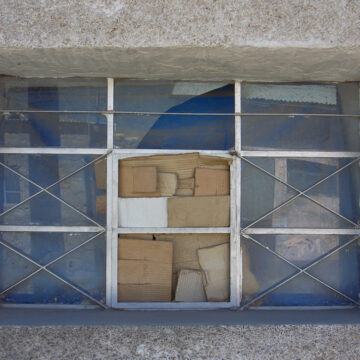
Your landlord should be keeping your building, and your flat, in good repair.
If they do not, there are several things you can do.
What does the law say?
Your landlord is responsible for keeping the exterior and structure of your building in good repair. They’re also generally responsible for fittings such as showers, baths, cookers and heating.
- In England and Wales, the relevant law is the Landlord and Tenant Act 1985, section 11.
- If the disrepair is making your home unfit for human habitation, the rights set out in the Homes (Fitness for Human Habitation) Act 2018 might also apply.
- Also see the ‘more advanced information’ section below.
You are responsible for making sure you do not cause any harm to the building or your flat through your own activities, for example taking up a carpet, or making a hole in the wall.
What action can I take?
Do this first
Check who is responsible for the issue — you or your landlord. If you’re not sure, your tenancy agreement should make this clear.
Many tenancy agreements are hard to understand, so if you are not sure, there is useful guidance from Shelter on what is covered by the rules.
Make sure you have contacted your landlord in writing (via their website, or by email or letter) clearly stating the date, what needs to be fixed, any impact it is having on your health or daily life. Use our template letter (you’ll find it on that page) if it helps.
Keep records of all conversations with your landlord over the issue, whether written or verbal. Note the date and any promises made.
If that doesn’t work…
If you have done all of the above and it is clear that your landlord is not going to make the repairs, there are a few other things you can try:
Make a formal complaint to your landlord in writing.
If you are a housing association tenant, there should be a complaints procedure on your landlord’s website.
Wait for a response, and if it is unsatisfactory you can reply asking for a ‘final response’ — a last chance for them to put things right — before escalating your complaint.
See our ‘follow up letter’ template which you can use in this situation.
Escalate your complaint.
Eight weeks after your landlord’s final response, if you’re still not satisfied, you can get in touch with the housing ombudsman. This is a free service. Find more detail on this page from Shelter.
Maybe make the repairs yourself
This is something to consider if you have waited a long time with no satisfactory response.
Write to your landlord and tell them that you are giving them notice that you are going to make or arrange the repairs yourself, and take the costs out of your rent.
Make sure you state a reasonable amount of time in which you will wait for a reply before going ahead.
It’s important to follow the right procedure if you do this, or you could be breaking your tenancy agreement and run the risk of eviction.
If you are in England, see this page on doing the repairs if your landlord won’t from Shelter, which also has a template letter you can download. There is also guidance from the Citizens’ Advice Bureau here.
You may consider legal action.
Organise
If the problem is widespread, and others in your block are facing similar issues, consider getting together in a residents’ action group, or starting a campaign.
Ask your representatives
Contact your councillor or MP and request their help.
Further information
- The Homes (Fitness for Human Habitation) Act 2018 amended the law which was already set out in the Landlord and Tenant Act 1985, so you might need to look at section 9A to 10 of the 1985 Act for the basic detail that underlies the current rules.
- If disrepair is making your home hazardous (likely to cause an accident), it is worth knowing that under the Housing Act 2004 (section 3(1)) the local housing authority must keep all housing conditions in their area under review.
This is to identify any action that they may need to take on hazardous deficiencies under the Housing Health and Safety Rating System (HHSRS) guidance.
This applies to all housing, including the housing authority’s own property. If the lack of repair (or any other issue) is making your home hazardous, you could ask Environmental Health to assess your home, and they have the power in some circumstances to take enforcement action.
If your landlord is the council/local authority, Environmental Health can’t take enforcement action against them, but they still have a duty to assess housing conditions in their area and their assessment might make it possible for you to take action under the provisions in the Homes (Fitness for Human Habitation) Act.
If your landlord is not the local authority, Environmental Health could force them to act to remedy the problem. There is more information about this on the Citizens’ Advice Bureau website here, and there is an example letter here.
- If you are injured or your property is damaged, there might be other relevant obligations for your landlord, and there are more details on that from the Citizens’ Advice Bureau.
- For some repairs, known as ‘qualifying repairs’, the right to repair scheme might apply. You can find out more about this in this guidance from the Citizens’ Advice Bureau.
Links to read
- How to report repairs to a council or housing association landlord (Shelter)
- Repairs – what are the landlord’s responsibilities? (Citizens Advice)
- Repairs and maintenance in council and housing association homes (Shelter)
- Complain about council or housing association repairs (Shelter)
- Complain to the Housing Ombudsman about repairs in social housing (Shelter)
- Legal action if your landlord won’t do repairs (Shelter)
- Withholding rent because repairs haven’t been done (Citizens Advice)
- Paying rent when repairs are a problem (Shelter)